

Children, teens, and family therapy
For every age, every stage, and every kind of family.
Sessions across Florida in English and Spanish.
How I work with children
Children come to therapy for many reasons. Some of the most common:
Anxiety · worry and fears · big emotions that are hard to manage · changes at home · difficult friendships · school stress · grief and loss · ADHD · autism · sensory differences · behavioral challenges at home or school

Kids need a different kind of therapy
Children don't always come in ready to sit across from someone and talk about their feelings. That's not a limitation. That's just how kids work.
Play is a child's natural language. When there aren't words for something big, play, art, movement, and storytelling give kids another way to express it. And when a child feels safe enough to be themselves in the room, that's when real things start to shift.
Behavior is information
My approach is warm, playful, neurodiversity-affirming, and relationship-focused. Rather than focusing on behaviors to eliminate, I pay attention to what a child might be communicating through how they act, what they choose to play, and what they avoid. My job is to help make sense of it, and then work together, with the child and with you, to figure out what would help.
I work with children ages 6 and up.


Everyone is part of the process
I also believe children grow within relationships and systems. When helpful, I collaborate with parents and caregivers to better understand what's happening outside the therapy room. And help families build more connection, communication, and understanding at home.
Above all, I want therapy to be a place where kids feel known, respected, and genuinely enjoyed for who they are, not a place where they come to be “fixed.”
"Play is the child's language, and toys are their words."
—Dr. Garry Landreth
How I work with teens
Some of what I work through with teens:
Anxiety · stress and emotional overwhelm · ADHD and executive functioning · autism and identity · family conflict · friendships and social pressure · school difficulty · gender and sexual identity · low self-esteem · self-criticism

A space to figure things out
Being a teenager means navigating a lot at once: friendships, family, school, relationships, expectations, independence, and the very complicated business of figuring out who you are.
Therapy can offer a space to sort through all of it with an adult who isn't there to grade, discipline, or judge.
Making sense of who they are
My approach with teens is collaborative, genuine, and respectful of their growing autonomy. I don't believe teenagers need another adult telling them what they should think, feel, or do. Instead, I work alongside them to understand themselves, make sense of their emotions and relationships, build practical skills, and make choices that align with who they want to be.


Therapy, in many forms
Therapy doesn't have to mean sitting on a couch talking for an hour. Depending on the teen, sessions might include art, music, games, sandtray, creative activities, humor, or simply good conversation. Some teens want to dive deep, and others need time to decide whether this whole therapy thing is worth trusting. Both are welcome.
Parents and caregivers are still important partners in the process. I work to balance family collaboration with age-appropriate privacy, trust, and respect for the teen's voice.
The goal isn't to create a more compliant teenager. It's to help them become more understood, more connected, and more confident in navigating their own life.
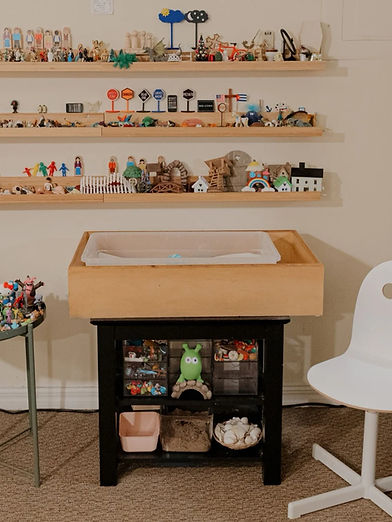
Sandtray therapy: one more tool in the room
Not everyone processes the same way. Sandtray therapy offers a different kind of space for children and teens, one where they build rather than explain, using figures and sand to create scenes that can reveal patterns, feelings, and stories they can't express with words.
Parents and caregivers are part of the process
Caregiver sessions
When your child or teen starts therapy, you don't step out of the picture.
Caregiver sessions are built in from the start. You'll stay connected to the process, and we'll talk about themes, progress, and ways you can help while protecting the details your child or teen shares. That way, therapy can remain a safe and trusting space.
Family sessions
Sometimes meaningful progress requires looking beyond the individual and working with the broader family system the child or teen belongs to.
In those cases, we shift into family sessions to work on things as a unit, not just through your child's individual progress.
This isn't about finding who's doing it wrong. Families are systems. When something shifts in one part, everything else adjusts.
Finding the right fit matters
If you think I might be a good match for your child and your family, you're welcome to reach out.
If you have questions about fees or insurance, see fees and coverage.